

L’essor de la communication digitale a donné un sacré coup à l’utilisation des scanners radio. Désormais, ces appareils qui autrefois étaient fréquemment employés deviennent de plus en plus rares. Mais cela ne signifie pas pour autant qu’ils ont perdu toute utilité. Vous serez surpris d’apprendre à quel point ils peuvent se révéler efficaces lorsqu’il s’agit de trouver une information.
En effet, de nouveaux modèles de scanners radios étoffés de fonctionnalités intéressantes apparaissent aujourd’hui sur le marché. Vous avez par exemple le Uniden UBC – 125 XLT et le Uniden UBC – 355 CLT qui présentent des caractéristiques qui diffèrent. Voici un guide d’achat complet sur les meilleurs scanners radio.
Table des matières
Comment choisir un bon scanner radio ?
Les scanners radio permettent de surveiller et d’écouter plusieurs fréquences précédemment inscrites sur l’appareil. Il peut s’agir d’une émission radio, de la fréquence de la police, des services publics ou encore celle des pompiers. Ainsi, le choix du meilleur scanner radio doit reposer sur un certain nombre de critères que nous détaillerons dans ce guide.

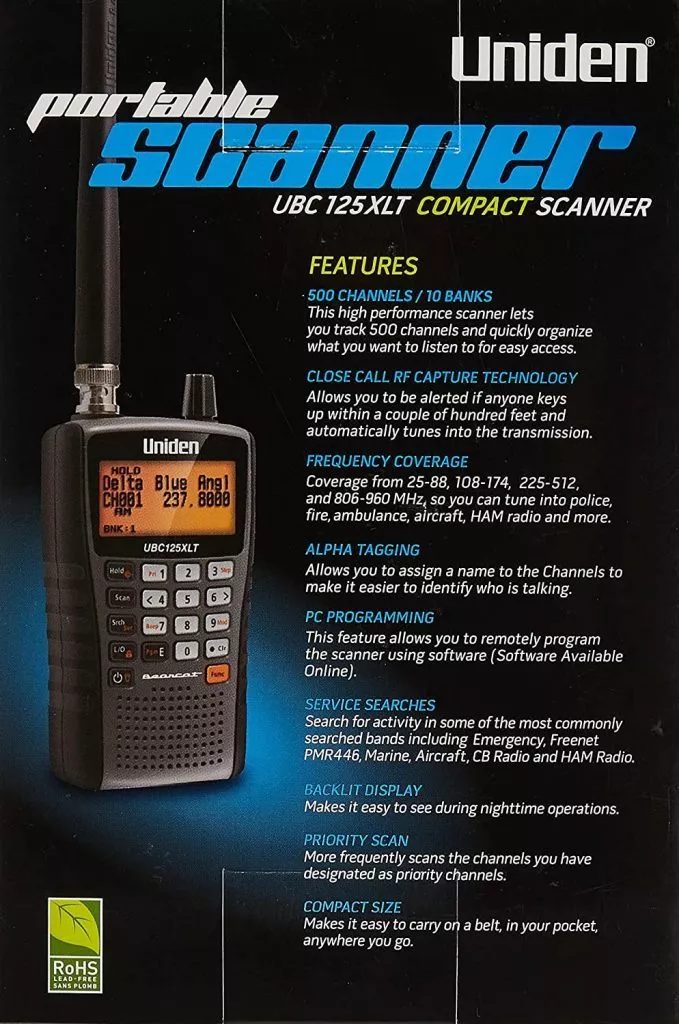
Uniden 125XLT – Scanner portable
- 500 canaux.
- 25-960 MHz (avec écarts).
- Fonction d’appel rapproché. 10 bracelets de recherche
- Il couvre 25-88 MHz, 108-174 MHz, 225 – 512 MHz et 806-960 MHz avec 5/6.
- Antenne : 50 Ohms / Rejet : 80 décibels
Choisissez le type de service qui vous intéresse
Les différents modèles de scanner radio disponibles aujourd’hui n’intègrent pas tous les mêmes fonctions. Certains sont plus aptes à l’écoute des fréquences des services publics que d’autres. De même, il en existe qui sont plus adaptés aux fréquences communautaires qu’aux autres lignes de diffusion. Ainsi pour choisir le bon scanner et être sûr de ne pas gaspiller votre budget, vous pouvez déjà commencer par définir l’usage que vous prévoyez de faire de l’appareil.
Certaines institutions (publics en l’occurrence) responsables de la transmission de données précieuses à travers des technologies innovantes, mettent la palette de prix assez haut. Ce qui implique que pour accéder à ces données vous serez obligé de débourser un montant considérable pour l’achat de votre scanner radio.
L’avantage ici est que si jamais vous n’êtes pas intéressé par leurs services, vous pourrez économiser énormément d’argent en optant pour un modèle plus adapté. Par ailleurs, les fonctionnalités tels que la connexion automatique et le programme d’avertissement météorologique sont également des critères qui vous aideront dans votre choix.
Le canal et le mode de recherche
Pour être sûr que vous faites le bon choix, commencez d’abord par apprendre le jargon de caractérisation des scanners radios. Mais rappelons que cette étape n’est pas indispensable. En effet, il existe des termes spécifiques utilisés pour indiquer les fonctionnalités des appareils. Vous familiariser avec ce langage vous permettra de mieux cerner les bandes offertes par chaque type de scanner.
Car les modèles disponibles aujourd’hui n’offrent pas tous les mêmes bandes ni le même nombre de canaux. Or, ce sont ces paramètres qui conditionnent la limite des transmissions auxquelles vous pouvez accéder. Ainsi, en maîtrisant le jargon de caractérisation, vous serez en mesure d’identifier vous-même le nombre de changements disponible sur le modèle concerné. Et donc, en fonction du nombre de fréquences que vous prévoyez d’écouter à l’avenir, vous pourrez choisir le type de scanner radio adapté.
La plupart des scanners offrent en moyenne une cinquantaine de canaux. Mais il en existe quelques-uns qui vous permettent d’intégrer jusqu’à plus d’un millier de canaux. Cela dit, si votre objectif est d’écouter quelques fréquences, vous pouvez vous limiter aux modèles classiques. Par contre, si votre radio est destinée à surveiller un nombre élevé de fréquences, il faudra choisir un appareil compatible. Toujours dans cette optique si vous avez en tête d’effectuer un écoute d’une transmission précise, vous devez vous assurez que cela sera possible avec le scanner que vous envisagez. Il s’agit là d’une caractéristique qui optimise votre choix et facilite en même temps l’utilisation.
La vitesse de recherche et d’analyse des fréquences
Les scanners radio disposent d’un catalogue qui leur permet de trouver les fréquences régionales. Parmi ces dernières, seulement quelques-unes sont fonctionnelles et écoutées. Ce qui implique que le rôle du scanner sera de tous les analyser dans un laps de temps donné, afin d’identifier les fréquences non pertinentes. Sur ce plan, certains modèles sont plus rapides que d’autres. Ceci étant, la capacité d’analyse et d’identification de fréquences est un critère à prendre en compte. Mais si vous êtes exigeant sur l’efficacité, il faudra aller plus loin en évaluant la vitesse de transmission des fréquences recherchées.
Le type de construction
Lorsque l’on s’écarte un peu du côté technique, on se rend compte que les fonctionnalités ne sont pas les seuls éléments qui différencient les scanners radios. En effet, chaque type d’appareil radio a un mode de construction et donc un taille donnée. Cette dernière dépend essentiellement de la fonction que l’outil est destiné à exercer. S’il s’agit d’un scanner portatif par exemple, vous conviendrez que ce dernier aura une taille abrégée. Étant donné qu’il est construit pour être déplacer le plus facilement possible. Il sera donc beaucoup plus léger, et son prix avec.
Sa seule insuffisance réside dans le volume sonore qui se limite à une amplitude plutôt basse. On peut également lui reprocher la réception du signal qui s’avère médiocre. Par ailleurs, on a le scanner fixe qui est conçu pour être installé dans un emplacement fixe comme un bureau par exemple. Si le volume du son ainsi que la réceptivité de la radio sont des points importants à vos yeux, vous pouvez opter pour un scanner mobile. Il émet un son plus imposant et son aptitude de réception est nettement supérieure à celle du portatif. Il peut être installé dans les véhicules au niveau du tableau de bord.
Notre avis sur le meilleur scanner radio 2021
Il existe une multitude de marques aujourd’hui sur le marché et elles n’ont pas toutes les mêmes fonctionnalités et ne sont pas égales en matière d’efficacité. Ce comparatif vous aidera justement à identifier le meilleur scanner radio, qui répond à vos exigences.
Uniden UBC – 125XLT Scanner Portable
Uniden est une marque créée par la société japonaise spécialisée dans la conception et la distribution de matériels de communication non filaire. L’objectif de ce groupe étant d’améliorer les systèmes de communication grâce à une technologie de pointe, elle se démarque par l’invention de nouveaux produits. Dans cette même optique, la société se permet également d’améliorer les gadgets existants.
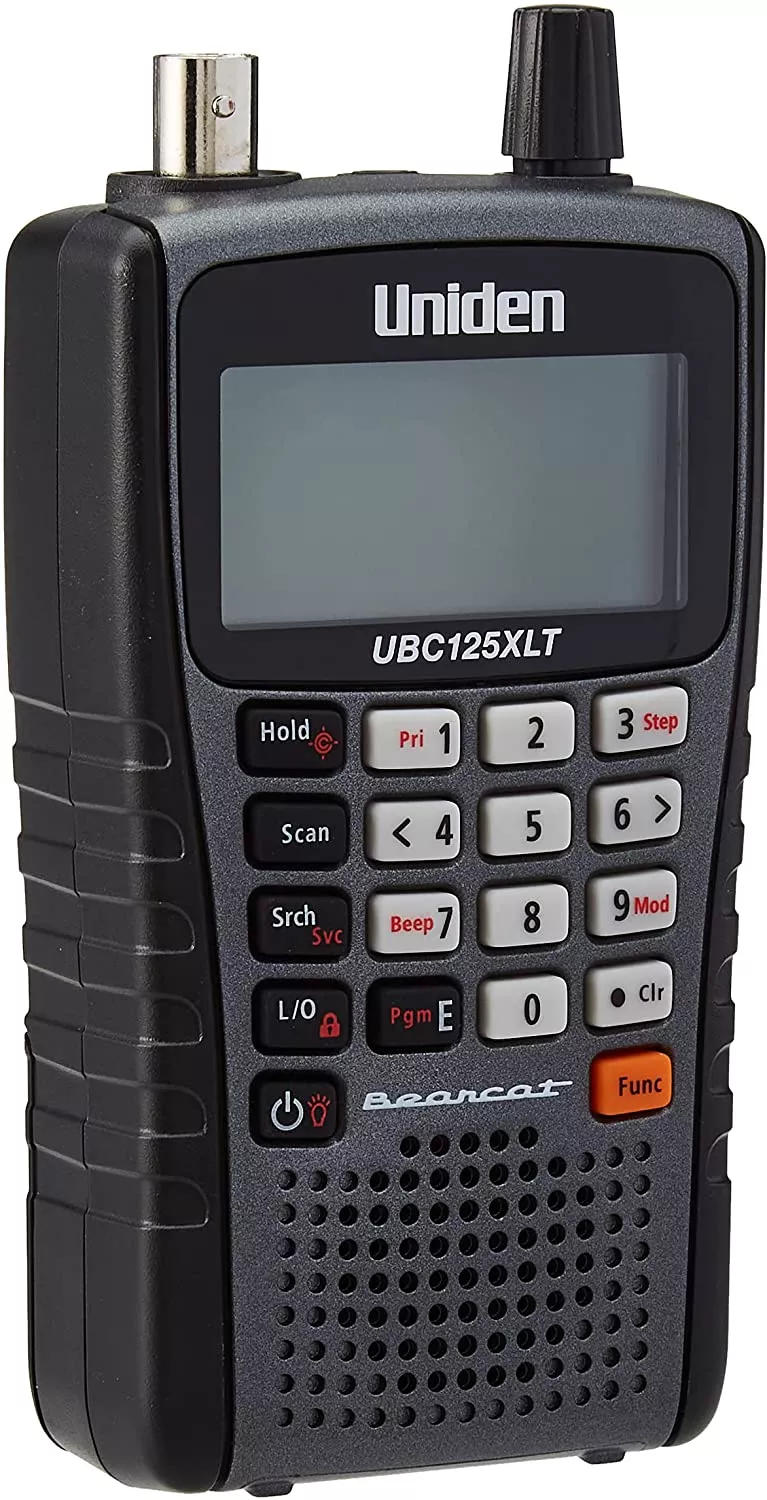
L’une de ses plus grosses inventions qui a fait sa renommée est le Uniden UBC – 125XLT. Il s’agit en effet d’un scanner radio portatif équipé d’une fonction Close Call Capture. Cette dernière étant similaire au fréquencemètre classique permet de capter les émetteurs proches de manière instantanée. L’appareil dispose de 500 canaux radio répartis en 10 groupes de 50.
Principales caractéristiques
La détermination de l’efficacité de l’Uniden passe par l’évaluation de sa performance et des fonctionnalités qu’il intègre.

Performance
Le Uniden UBC – 125XLT offre une série de fréquences couvrant des bandes allant de 25 MHz à 960 MHz et fragmentés en 4 catégories. Le premier couvre les fréquences situées entre 25 et 88 MHz. Le second concerne les fréquences qui varient de 108 à 174 MHz. Le troisième et le quatrième varient respectivement de 225 à 512 MHz et de 806 à 960 MHz. Sur cet appareil, on distingue 500 mémoires de stations programmables. Celles-ci sont groupées par lot de 50 et sont capables de mémoriser toutes les fréquences qui y sont insérées.
Une fois la fréquence mémorisée, vous serez en mesure d’y accéder sans avoir à entrer le code correspondant. Et ce même en cas de pénurie de batterie. Les fréquences mémorisées peuvent être personnalisées à partir d’un code alphanumérique. Ce qui vous permet de mieux vous organiser afin de retrouver vos favoris plus rapidement.

Balayage automatique et programmable
Le scanner radio Uniden possède une fonction de Close Call Capture qui lui permet de faire une réception des fréquences à triple changement. Il s’agit d’une technologie basée sur un système de balayage automatique. Les signaux initiaux sont redirigés vers des signaux finals pour une programmation qui dure en moyenne 10 secondes. Les signaux VHF et UHF peuvent être balayés. De plus, l’UDC 125XLT est en mesure de capter les fréquences se trouvant à proximité dans un rayon restreint. Il peut ainsi différencier celles qui émettent les ondes les plus puissantes.
Les dernières fréquences repérées par le scanner sont également soumises au balayage automatique. La programmation de la fonction Close Call peut être effectuée à partir de n’importe quel ordinateur. A condition bien sûr que ce dernier soit équipé du logiciel ARC-125. Il s’agit d’une application qui permet de gérer les données de fréquence grâce à une option capture web.
Design et présentation
Le Uniden est un appareil facile à transporter et pourvu d’un certain nombre fonctionnalités qui rendent son usage plus pratique. Il arbore un design compact et léger avec un poids moyen d’environ 175 g. Il est muni d’un écran LCD qui optimise son fonctionnement dans tous types d’environnement. En effet, ce dernier comporte un système automatique d’ajustement de la luminosité qui règle l’éclairage de l’écran en fonction de la lumière ambiante.
Ce qui permet d’économiser considérablement de l’énergie en réduisant et en augmentant la clarté selon celle de l’environnement. Il est par ailleurs équipé d’une antenne qui lui permet de capter les signaux à proximité. Il dispose également d’un indicateur visuel qui indique l’ampleur des transmissions reçues.
Récepteur scanner Uniden UBC355CLT
Le récepteur UBC355CLT est un modèle de scanner radio amélioré qui s’adapte à de nombreux usages. Il s’agit d’un scanner base/mobile qui peut être installé à domicile, dans un bureau ou sur le tableau de bord d’un véhicule. La particularité de ce récepteur réside dans le fait qu’il offre l’accès à des transmissions standards très rares.
Par exemple, avec l’UBC 355 CLT, vous avez la possibilité de vous brancher sur les lignes radios des institutions telles que l’aviation ou l’armée Et ce, grâce à un système programmable composé de 7 canaux. Le récepteur scanner Uniden offre au total 300 canaux sur des fréquences variées. Il dispose notamment d’une fonction Close Call qui détecte les transmissions à proximité. On y retrouve également un système de stockage RF qui mémorise les fréquences précédemment écoutées. Il offre également un système de balayage automatique des stations.
Les commandes et les fonctions du récepteur scanner
- Le récepteur UBC355CLT dispose de 300 canaux réparties en 7 groupes préprogrammés ou programmables par l’utilisateur lui-même.
- Il permet d’accéder à la fréquence radio des services d’urgences, de l’aviation civile, de la marine, du freenet, et du PMR.
- Il propose 23 bandes de recherche réparties en 4 catégories allant de 25 MHz à 960 MHz.
- Une mémoire intégrée qui enregistre les fréquences repérées par le récepteur.
- Un programme de balayage automatique qui interrompt par moment la transmission.
- Un système de protection qui verrouille la mémoire en cas de rupture d’alimentation pour éviter la perte accidentelle des données mémorisées.
- Le délai de reprise de la recherche ou du balayage par le récepteur est de deux secondes environ.
- Une option Close Call pour la capture des transmissions à proximité.
- Deux modes de modulations radio : AM et FM.
- Un écran d’affichage rétro éclairé muni d’une horloge interne.
Par ailleurs, le récepteur scanner Uniden UBC 355 CLT est livré avec un cordon d’alimentation, d’une antenne télescopique et d’une notice d’utilisation. Il dispose également d’un trépied rabattable pour diverses positions d’utilisation.
Comment utiliser un scanner radio ?
A présent que vous avez pris connaissance des meilleurs scanners radio, et de leurs fonctionnalités, vous pouvez faire votre choix en fonction de vos besoins. Une fois le choix effectué, vous aurez besoin d’un guide d’utilisation complet sur le mode d’emploi de l’appareil.
Mise en marche
Avant la mise en marche de l’appareil, vous devez vérifier s’il fonctionne avec des piles ou s’il comporte un système de branchement. Dans le cas d’un scanner radio à batterie, vous devez y installer les piles qu’il faut en respectant les polarités. Par contre, s’il est équipé d’un système de branchement sur secteur, il faudra le connecter directement à une prise. Montez ensuite l’antenne télescopique présente dans l’emballage sur la radio puis appuyez sur le bouton Power pour démarrer.
Réglages et précautions
Pour mémoriser les fréquences auxquelles vous accédez régulièrement, le bouton hold est à votre disposition. Il vous suffit de cliquer dessus et de configurer le canal concerné avec un chiffre de votre choix. C’est ce dernier qui vous permettra plus tard de retrouver la fréquence enregistrée. En ce qui concerne les précautions, il faut tenir l’appareil hors de la portée des enfants et éviter tout contact avec des matières liquides. Il est également recommandé de faire appel à un spécialiste pour la réparation en cas de sinistres.
Ce comparatif a été réalisé en partenariat avec turbo-tendances.fr (magazine auto/moto) et records-du-monde.fr (tous les exploits insolites dans diverses thématiques).